


Hover to zoom. Click for full screen.
Amitabha-Buddha-Statue – Unendliches Licht & tiefer Friede
- Gottheit Buddha Amitabha
- Herkunft Kathmandutal, Nepal
One of one. The statue in these photos is the statue you receive.
- Free shipping on orders over $150
- Wrapped by hand for the journey
- Secure checkout
Caring for your statue
Dust it with a soft, dry brush. Keep water and metal polish away from gilded, painted or darkened finishes: the gold and the patina are part of the statue. Lift it by its base, never by the arms or the crown.
Traditionally a statue sits at or above eye level, in a clean place, never on the floor.
Shipping and returns
Free shipping on orders over $150. Every statue is wrapped by hand for the journey.
Die Geschichte dieses Stücks
Amitabha-Buddha-Statue – Unendliches Licht & tiefer Friede
Spezifikationen
-
Abmessungen (Höhe): 27 cm
-
Abmessungen (Breite): 20 cm
-
Material: Kupfer
-
Oberfläche & Technik: Oxydiert, Wachsausschmelzverfahren, handveredelt
-
Kunststil: Newar, tibetisch, himalayisch
-
Herkunft: Patan, Nepal / Kathmandu-Tal
-
Echtheit: Zertifikat enthalten
Lebendige himalayische Kunst aus Kupfer
Diese Amitabha-Buddha-Statue ist lebendige sakrale Kunst. Sie verleiht Ihrem Raum eine tiefe emotionale Präsenz.
Sie ist aus Kupfer gefertigt und verkörpert eine lange Tradition der Hingabe. Newar-Kunsthandwerk verwandelt dieses Metall in ein Objekt der Meditation.
Reflexion: Inneren Frieden finden
Suchen Sie inneren Frieden inmitten des Alltagsgeräuschs? Wahre Stille braucht einen Mittelpunkt für achtsame Dekoration.
Als Meditationsstatue dient dieses Stück als Gefäß. Es schafft in jedem Raum einen Ort der Stille.
Die heilige Form: Grenzenlose Barmherzigkeit
Amitabha Buddha verkörpert das Erwachen grenzenloser Barmherzigkeit. Er repräsentiert den roten Glanz des unendlichen Lichts.
-
Unendliches Licht: Erhellt die Dunkelheit und wärmt den Geist.
-
Almosenschale: Enthält den Nektar unsterblicher Weisheit.
-
Meditationshaltung: Repräsentiert absolute Stille und geistige Klarheit.
Kunsthandwerk: Oxydierte Kupfertechnik
Dieses Stück ehrt die alte Tradition der himalayischen Kunst. Die oxydierte Kupferoberfläche verbindet Gewicht mit anmutigen Linien.
Meisterhandwerker verwenden hier das Wachsausschmelzverfahren. Dieser Prozess vereint innige Gebete mit künstlerischer Präzision.
Zweck: Der buddhistische Altar
Es ist unverzichtbar für einen buddhistischen Altar und verankert Ihre Praxis. Es bringt einen sanften, erdenden Frieden in Ihr Zuhause.
Abschließender Segen: Möge Amitabha Buddha in jedem Herzen bleibende Weisheit erwecken.
Buddha Amitabha
Lernen Sie Buddha Amitabha kennen
Buddha des grenzenlosen Lichts · Opame auf Tibetisch
Amitabha ist der Buddha des grenzenlosen Lichts, der dem Reinen Land des Westens, Sukhavati, vorsteht. Vor langer Zeit gelobte er, dass jeder, der seinen Namen von ganzem Herzen ruft, dort wiedergeboren wird. Seine Farbe ist Rot, die Wärme der untergehenden Sonne.
Worauf Sie achten können
Beide Hände ruhen im Schoß in der Geste der Meditation.
Oft liegt eine Almosenschale in seinen Händen.
Pfauen, seine Reittiere, können in den Thron unter ihm geschnitzt sein.
Om Amideva Hrih
Genauer hinsehen
Every detail, finished by hand
The face, the hands, the jewels and the lotus beneath. Take your time with them.


How it was made
Wax, clay and fire
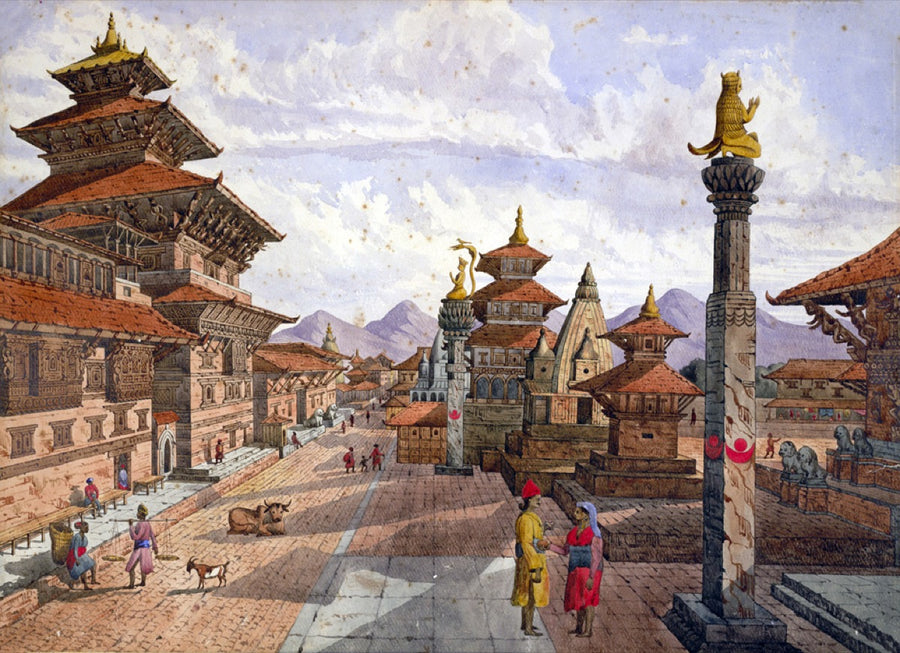
Metal statues like this one are cast by Newar artisans of the Kathmandu Valley the way their families have cast them for centuries: in lost wax, then finished by hand for days or weeks.
-
A figure in wax
The sculptor models the statue in beeswax softened with resin: warm enough to shape a face and fingers, firm enough to hold the smallest jewel.
-
Wrapped in clay
The wax is covered in coats of fine clay and left to dry, with small channels open for the metal to enter.
-
Fire
The mould is heated until the wax melts and runs out, leaving a hollow in its exact shape. Molten copper or bronze is poured in.
-
The mould is broken
Once the metal cools, the clay is broken away. A lost-wax mould can be used only once.
-
Chasing
With small chisels and punches the artist works over every surface: the eyes, the hair, the lotus petals, the patterns of the robe.
-
Gold, colour and the eyes
The statue is gilded, darkened or polished, and many faces are painted with gold and pigment. Painting the eyes comes last: it is when a statue is said to come alive.
Before you bring a statue home
The questions people ask us most. Anything else, write to us.
Ask us a questionIs the statue in the photos the one I'll receive?
For pieces sold one at a time, yes: each has its own listing, and the photos and size are of that statue. If a listing offers several pieces or sizes, they are made in small batches and vary a little from the photos.
Copper, bronze, gilded: what's the difference?
Copper takes fine chiselling and gold beautifully, so it is the classic metal of Newar statues. Bronze, copper with tin, is harder and darkens with age. A statue may then be gilded, darkened to an antique tone or left as bright copper. Each listing names its metal and finish.
Should the statue be consecrated?
That is your choice. Many families take a new statue to a monastery or temple, where it is filled with rolled prayers and blessed. If you would like to know whether a particular statue can be filled, write to us before you buy.
Do I need to be Buddhist to keep one?
No. Many people keep a statue as a work of art, a reminder or a focus for quiet moments. It is simply kind to treat it with respect: give it a clean place at or above eye level, not the floor or a bathroom, and don't use it as a bookend.
Can I see more of it before I buy?
Yes. Write to us and we'll gladly send more pictures of the piece.
Shipping and returns
Every statue is wrapped by hand for the journey, and shipping is free on orders over $150. See our refund policy for returns.


