


Search for handmade singing bowls from Nepal and you get thousands of listings, many with the same stock photo and the same promise. Some of those bowls were made in Nepal. Some were made elsewhere and only described as "Tibetan" or "Himalayan". If you want a bowl that was really made by hand in Nepal, the shop you buy from matters as much as the bowl.
We sell singing bowls ourselves, so we have an obvious interest. To keep this fair, we compared five independent shops, including ours, only on things you can check on their own websites. We read each shop's about page, product pages and policies on 25 November 2026. We have not bought from the other four shops, so this is a comparison of what they publish, not a test of their bowls.
How we compared the shops
We left out Amazon, Etsy and eBay sellers, because listings there change constantly and it is hard to see who made a bowl. We also left out shops that did not say where their bowls are made, and shops where singing bowls are a side line. For the rest, we looked at six things:
- Origin. Does the shop say, in plain words, that its bowls are made in Nepal?
- The exact bowl. Do you see the bowl you will receive, or a sample of the design?
- Specs. Are the note, size and weight listed?
- Sound. Can you hear the bowl, or ask for a recording, before you buy?
- Returns. Can you send it back if you do not like it, and on what terms?
- Shipping. Where does it ship from, and how is it sent?
Why does origin matter? The Kathmandu Valley has a long metalworking tradition. UNESCO describes Newar craftsmanship in brick, stone, timber and bronze in the valley as among the most highly developed in the world (UNESCO World Heritage Centre, Kathmandu Valley), and Lalitpur, also called Patan, is known for its metalworkers (Encyclopaedia Britannica, Lalitpur).
The five shops at a glance
| Shop | Based in | Exact bowl shown | Note listed | Weight listed | Returns |
|---|---|---|---|---|---|
| Mudra Craft | Bowls from Kathmandu artisans | Yes | Where checked | Where we have it | 14 days, ask first |
| Dharma Tool | Thamel, Kathmandu | Video on request | Chosen from a list | Not stated | 30 days, return shipping paid by shop |
| Himalayan Bowls | Ships from Atlanta, USA | Recording of each bowl | In the title | Not stated | 30 days, 5% restocking fee |
| Healing Singing Bowl | Thamel, Kathmandu | Not on the page we read | Not stated | Not stated | Damaged or faulty items only |
| Buddha Chime | Thamel, Kathmandu | Tone video on request | On request | Some pages | 14 days, buyer pays return postage |
1. Mudra Craft
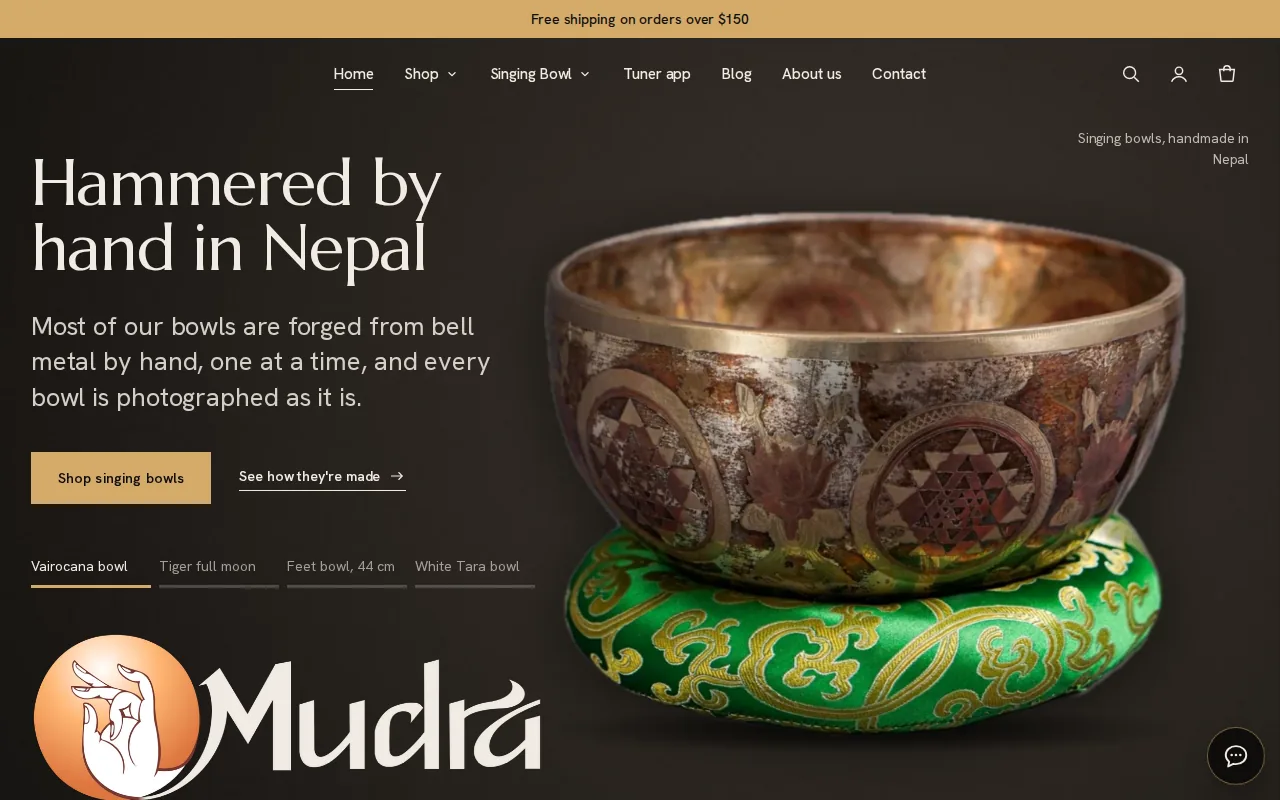
This is our shop, so read this entry knowing that. Mudra Craft sells singing bowls and Buddhist statues made by artisans in Kathmandu, Nepal. The company, Mudra Craft F.Z.C, is registered in Ajman in the UAE, and in November 2026 we took our bowls to the China International Import Expo in Shanghai and a traditional culture expo in Beijing.
What you get: every bowl is one of one, and the photos show the bowl you receive, not a sample. Each listing says whether the bowl was hand-hammered or cast and lathe-turned, gives its size, its weight where we have it, and its note where we have checked it. If a note is not listed yet, the listing says so.
Also useful: we make Mudra, a free tuner app for iPhone, iPad and Android that names a bowl's note and its hertz, so you can check any bowl, from us or anyone else. Our bowl quiz helps if you are not sure which note you want.
Keep in mind: returns are accepted within 14 days of delivery, and you need to contact us before sending anything back. Free shipping thresholds and delivery options depend on your country and are shown at checkout.
2. Dharma Tool
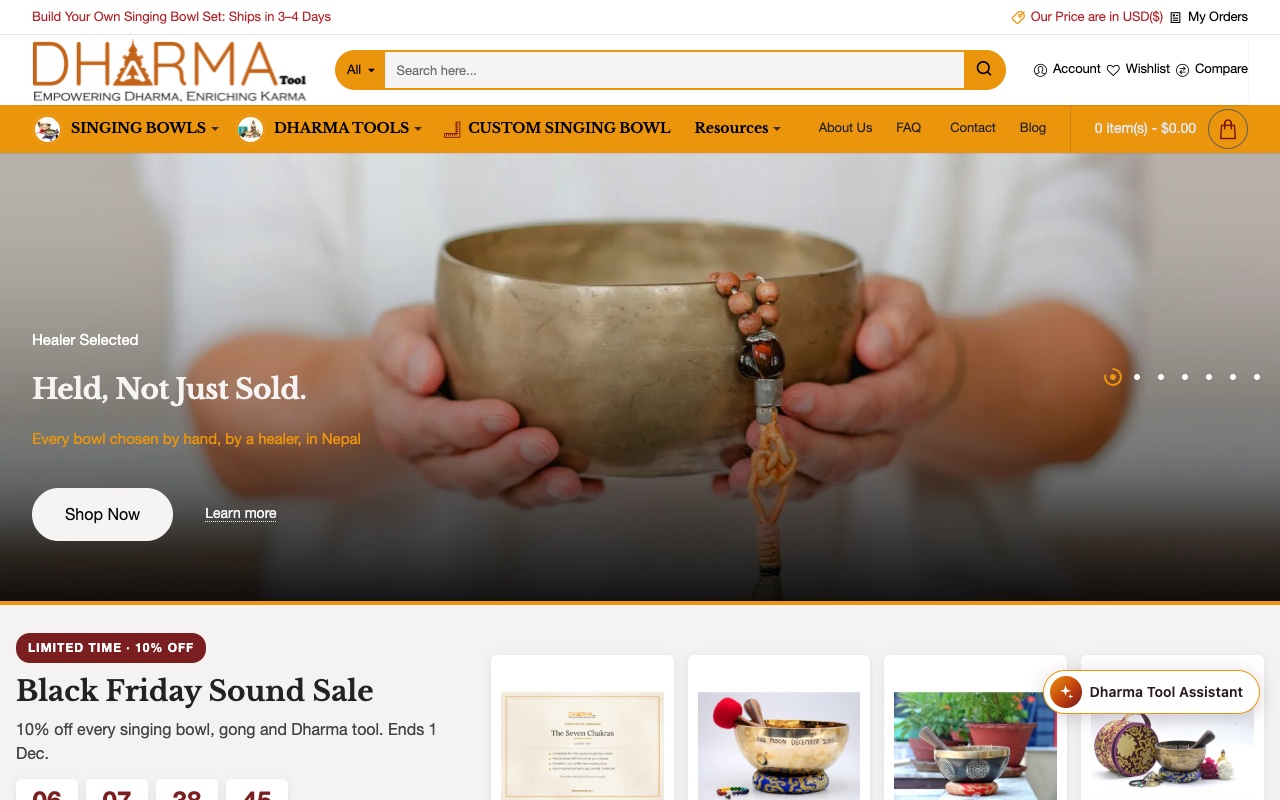
Dharma Tool describes itself as a Nepal-based shop founded in Kathmandu in 2017, with addresses in Thamel and in Australia. It says its bowls are 100% handmade in Nepal and that every piece is selected by a sound healer, Sunita Poudel.
What stands out: the clearest returns policy in this list. Its about page offers a full refund or replacement within 30 days and says return shipping is covered by the shop. Orders go by DHL Express from Kathmandu.
Keep in mind: you choose the note from a dropdown rather than buying one specific, photographed bowl, and the pages we read did not list weight or hertz. It does not publish sound clips, and explains why on its site; a video of your exact bowl is available on request.
3. Himalayan Bowls
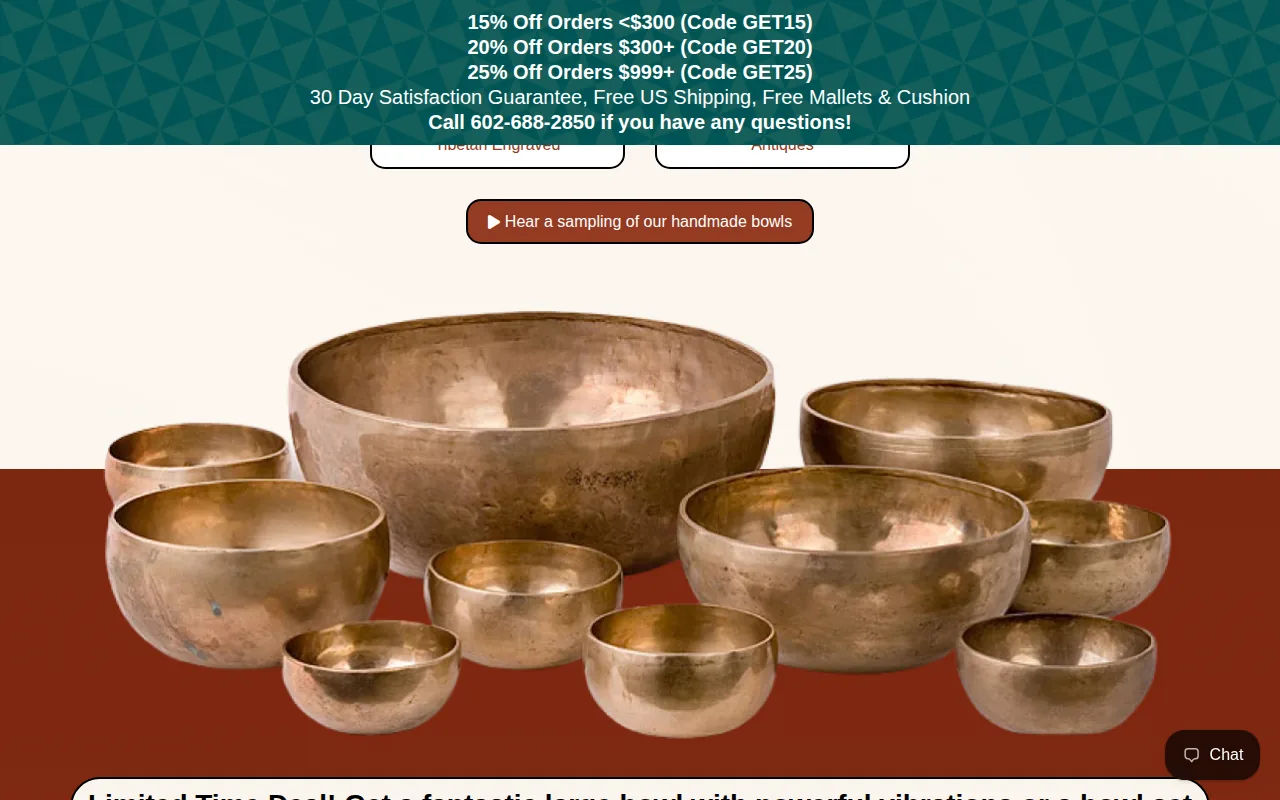
Himalayan Bowls has been selling singing bowls since 2001 and is the longest-running shop here. It says its bowls are 100% handmade in Nepal and that its manufacturing supports nearly 100 people there. Orders ship from a warehouse in Atlanta, Georgia.
What stands out: each bowl has its own recording you can play on the product page, and the note is in the product title. The shop has also published its own book about singing bowls.
Keep in mind: the pages we read did not list hertz or weight. Its 30-day money-back policy has a 5% restocking fee, and you pay return shipping. Several bowls we looked at were sold out, so check availability.
4. Healing Singing Bowl
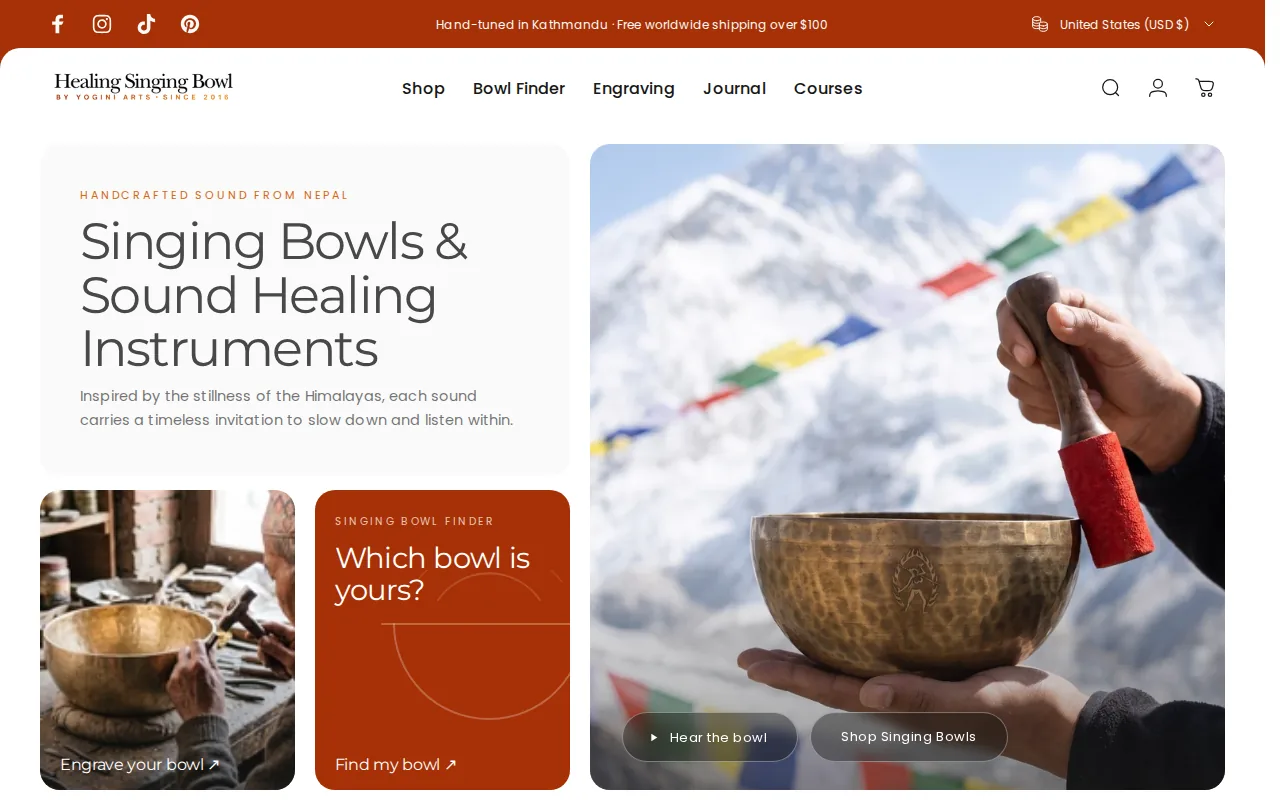
Healing Singing Bowl is part of Yogini Arts, with a workshop in Thamel, Kathmandu, crafting since 2016. Its bowls are described as hand-hammered and hand-tuned in Kathmandu.
What stands out: the widest range here, with around 217 bowl listings when we checked, plus a bowl finder tool, engraving and free worldwide shipping on orders over $100.
Keep in mind: returns are accepted only for items that arrive damaged or faulty, not for a change of mind, and problems must be reported within 48 hours. The product page we read gave size as a range and did not list note, weight or a recording.
5. Buddha Chime
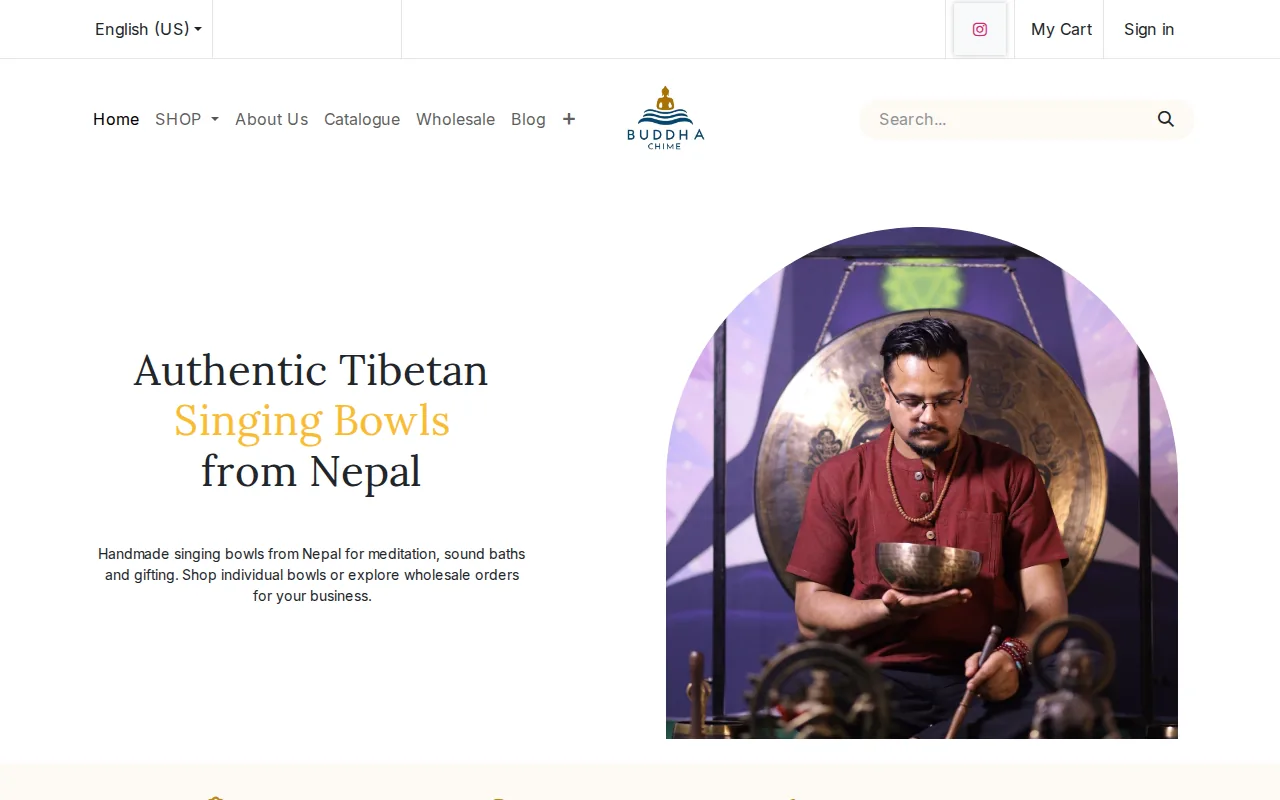
Buddha Chime was founded in 2019 and describes itself as a small singing bowl and felt maker based in Thamel, Kathmandu. It says every bowl is hand-hammered by artisans in Nepal, and its about page includes photos of the workshop.
What stands out: you can ask for the measured note and a tone video of a specific bowl before buying, and it accepts change-of-mind returns within 14 days with no restocking fee. Shipping is a flat rate worldwide by express.
Keep in mind: some product pages we read had specs left blank, so ask for size and weight before you order. You pay return postage to Nepal.
What to check before you buy
Whichever shop you choose, these checks protect you:
- Ask where it was made. "Tibetan" describes a style. A good seller will tell you the country and, ideally, the city.
- Ask for the exact bowl. Photos and a recording of the bowl you will receive beat a catalogue image.
- Ask how it was made. Hand-hammered and cast bowls are both real instruments, but they are priced differently. Our guide to hand-hammered vs cast singing bowls shows how to tell them apart.
- Check the note yourself. Handmade bowls are not tuned like a piano. A tuner app shows the real pitch, and our guide on how to test a singing bowl covers the rest.
- Read the returns policy before paying. The five shops above range from 30 days with return shipping paid to damaged-only returns.
Hammered metalwork is a real specialty of the region. The Rubin Museum notes that metal techniques were perfected by Newar artists of the Kathmandu Valley, including sheets hammered over shaped forms (Rubin Museum, Casting and Shaping Metal). For more on who makes bowls today, see our guide to singing bowls made in Nepal.
Frequently asked questions
Are Tibetan singing bowls made in Tibet?
Many bowls sold today as Tibetan singing bowls are made in Nepal, especially in the Kathmandu Valley. "Tibetan" usually describes the style and tradition rather than where a bowl was made, so ask the seller.
How can I tell if a singing bowl was handmade?
Look for hammer marks on the walls and base, slight irregularities in shape, and a seller who lists how the bowl was made. A cast and lathe-turned bowl has smooth walls and even machined rings.
Is it better to buy from a shop in Nepal or one abroad?
Both can work. Shops in Nepal often ship by express from Kathmandu, while shops abroad may ship faster within their own country. Compare returns policies, since sending a heavy bowl back to Nepal costs more.
Should a singing bowl come with a note?
Not always, but a listed note helps if you are building a set or playing with other instruments. If none is listed, ask the seller or check it with a tuner app.
Why do handmade singing bowls cost more?
Each one is shaped and finished by hand, which takes time and skill, and no two are the same. Cast bowls can be made faster and more uniformly.
If you want to see the exact bowl you will receive, with its note and size, browse the hand-hammered bowls at Mudra Craft.


