

First, the metal.
Copper and tin are melted together and cast into a thick disc: bell metal, the bowl before it is a bowl.
Free shipping on orders over $150
Handcrafted in Nepal, shipped worldwide


Hover to zoom. Click for full screen.
Not sure which note is yours? Take the 1-minute bowl quiz
Check any bowl’s note with Mudra, our free tuner app
One of one. The bowl in these photos is the bowl you receive.
A raised point rises from the floor of this 22 cm Lingam singing bowl in note G, hand-hammered from bronze in Kathmandu, Nepal. Rings of hammer marks circle inward and climb to that point, the lingam that gives the bowl its name.
The outside wears a tiger patina, mottled gold and bronze, with a carved symbol on the wall. This handmade singing bowl is a Lingam, a Tiger and a Full Moon singing bowl at once, and it sits in all three of those collections in our shop.
Seen from above, the rim opens into a full, rounded shape. Underneath, a dimple marks the centre of the base, directly below the raised point.
Strike the outer rim with the red-headed mallet and you hear a clear G with layers of overtone above it; the raised centre adds to that layering. Run the mallet slowly around the rim instead and the tone builds into a steady hum.
G is the note traditionally paired with the throat chakra, which makes this bowl a natural companion for chanting, voice practice and sound therapy. To check the note yourself, our free Mudra tuner app for iPhone and iPad will name it.
| Diameter | 22 cm |
|---|---|
| Fundamental note | G |
| Check the note | Free with the Mudra singing bowl tuner app |
| Chakra pairing | Throat, by the common note-to-chakra chart |
| Making method | Hand-hammered |
| Sold by | Mudra Craft |
| Origin | Nepal |
| Piece number | SB-00679 |
| In stock | One piece. This exact bowl. |
Rest the bowl on its cushion or your flat palm. Strike the outer wall below the rim with the padded mallet, or press the wooden end against the rim and circle slowly and evenly to make it sing. Keep it dry and wipe with a soft cloth; the patina is part of the bowl.
Free shipping on orders over $150. Every bowl is wrapped by hand for the journey.
Copper and tin are melted together and cast into a thick disc: bell metal, the bowl before it is a bowl.
The disc goes into a charcoal forge, fanned until it glows. It will go back in many times.
A team strikes the red-hot metal in turn, each hammer landing in rhythm, heat after heat, until the walls rise.
Between heats the bowl is quenched in water. The walls are drawn up and the rim is set.
Scraping on a hand lathe reveals the bright metal. The hammer marks stay: they are why no two bowls sound alike.
Every bowl is struck and played before it is listed. Check its note yourself with the free Mudra tuner app.
Workshop footage: Massage Around the World. Final clip: Mudra Craft.
We sell both, and every listing says which it is. Here is what the difference means for you.
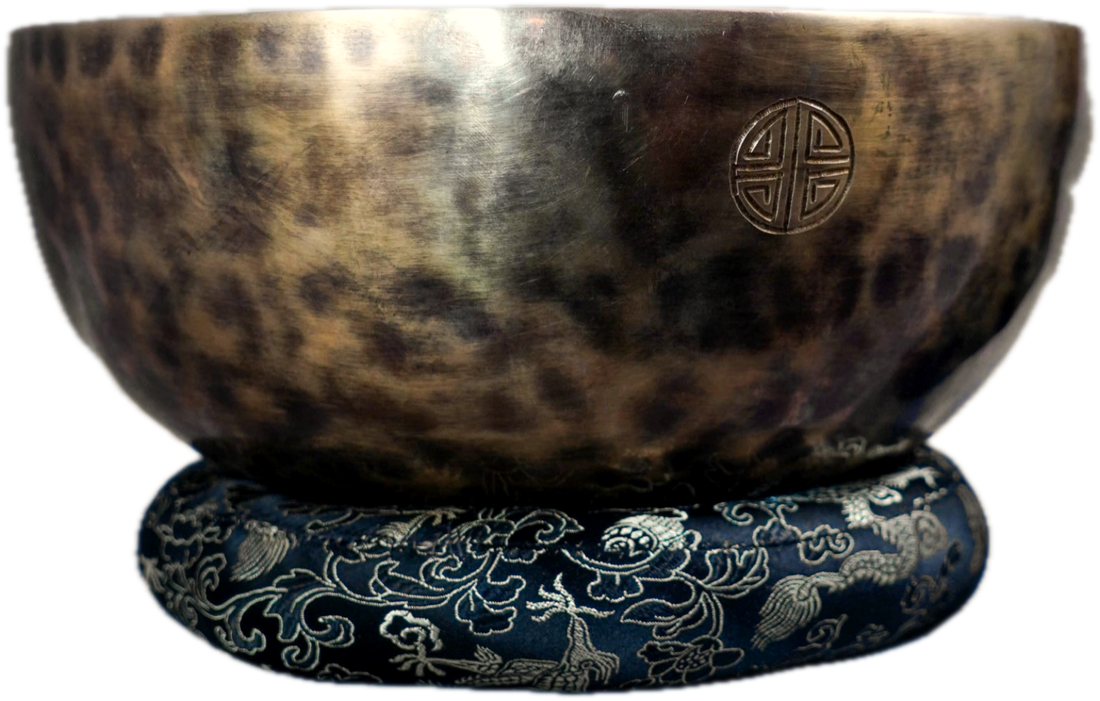
Forged from bell metal by a team of smiths, one bowl at a time.
From $43.22
Shop hand-hammered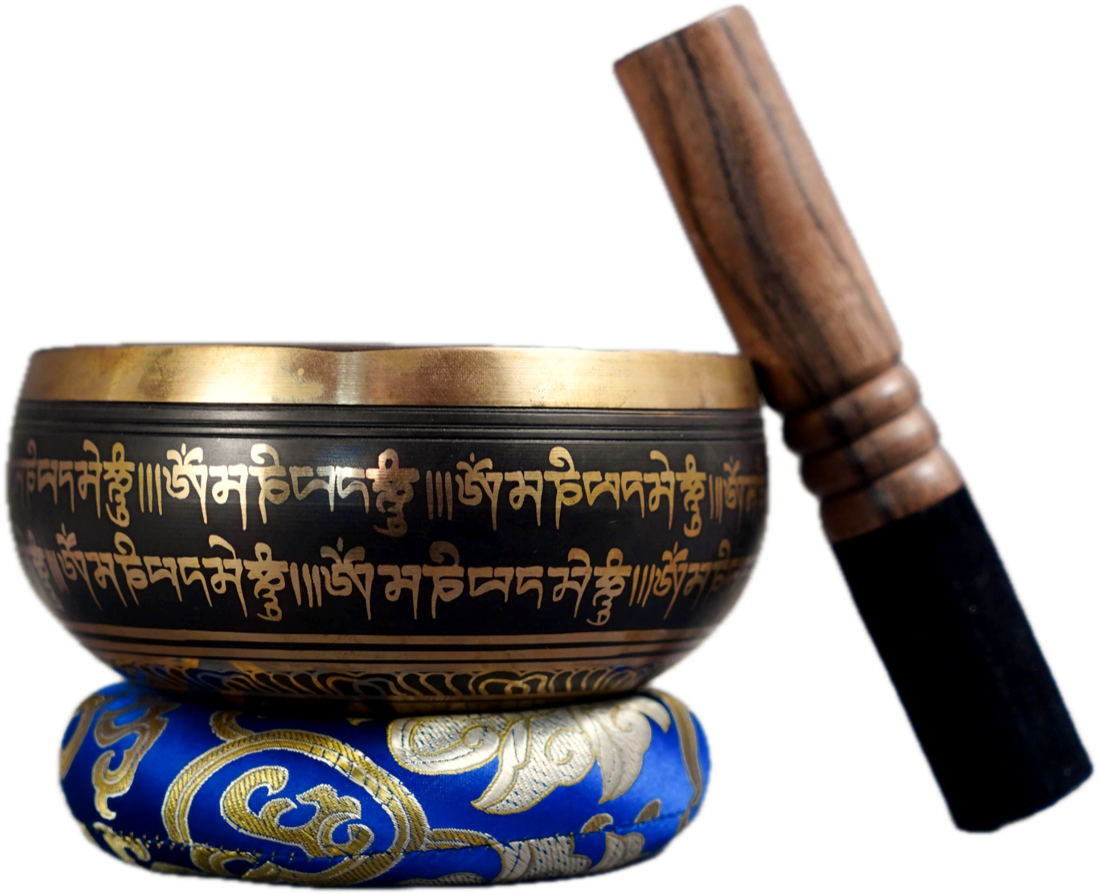
Poured into a mould and finished on a lathe. A fine first bowl.
From $15.00
Shop cast bowlsFree app for iPhone, iPad and Android
Mudra is our free singing bowl tuner. Strike your bowl or play its rim near your phone, and Mudra names its true note, how many cents it sits above or below it, and the chakra that note is traditionally linked with.
The questions people ask us most. Anything else, write to us.
Ask us a questionFor one-of-a-kind bowls, yes. Each has its own listing and piece number, and the photos, size and note are of that exact bowl. Bowls sold in several sizes, like our dotted bowls, are made in batches and vary a little from the photos.
If you'll play it every day or use it for sound work, a hand-hammered bowl. It has a richer, longer voice and no two are alike. For a first bowl, a gift or a shelf, a cast bowl does the job well at a lower price. Every listing says which one it is.
7 metal is the traditional name for the bell-metal recipe behind Himalayan singing bowls, which ties seven metals to the seven classical planets. Every hand-hammered bowl is bronze at heart, copper and tin, and the other metals, where they are used, vary from workshop to workshop. Bowls we describe as 7 metal say so on their own page. Our guide to 7 metal singing bowls explains the name and how to judge a bowl by its sound.
Choose the voice you like first. If you work with chakras, the common chart pairs C with the root through to B with the crown. Bigger bowls sound lower. To find the note of a bowl you already own, try Mudra, our free tuner app for iPhone, iPad and Android.
Chakras are a tradition, not a measurement. In the pairing we use, C is root, D sacral, E solar plexus, F heart, G throat, A third eye and B crown, so the note named in the listing points to the traditional chakra. Other charts differ, so see our singing bowl chakra guide, and Mudra shows the pairing when you play the bowl.
Download the free Mudra app for iPhone, iPad or Android, strike the bowl once in a quiet room and hold the phone close. Mudra shows the note, its hertz and the cents, with no ads and no account. Our note guide has more tips.
Close, but your room, mallet and hand will change it a little; a bowl always sounds richer in person than through a phone speaker. If you'd like to hear a particular bowl first, write to us before you buy.
Strike the outer wall gently with the padded end of the mallet, or press the wooden end against the rim and circle slowly to make it sing. Keep it dry, wipe it with a soft cloth, and don't wash it with harsh cleaners: the patina is part of the bowl.
Playing a bowl in the room is a different matter from placing one on your body. Don't place a bowl on your body if you have a pacemaker, implantable defibrillator, coronary stent, cardiac shunt or artificial valve, and never rest one on your belly during pregnancy. Avoid placing a vibrating bowl over metal implants or recent surgery. If you have epilepsy or a seizure history, talk to your doctor first.
Keep the volume moderate, because a bowl played close and loud can risk your hearing. We can't give medical advice, so please check with your clinician.
Every bowl is wrapped for the journey, and shipping is free on orders over $150. See our refund policy for returns.
35 cm · Note G · Hand-hammered
25 cm · Note A · Hand-hammered
Reviews
In-store review
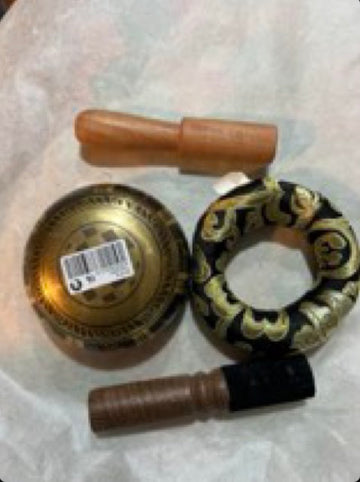
I bought my small bowl and it's so amazing.
Shop customer
In-store review
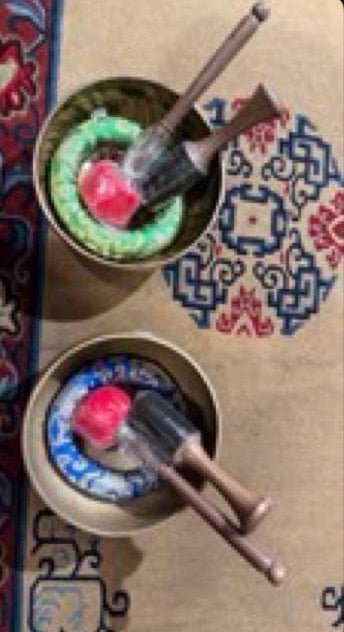
I bought two Tiger bowls here. Both are equally good, each on a different chakra.
Shop customer
Your cart is empty.
Find a bowl


