Free app for iPhone, iPad and Android
What note is your singing bowl?
Mudra is our free singing bowl tuner. Strike your bowl or play its rim near your phone, and Mudra names its true note, how many cents it sits above or below it, and the chakra that note is traditionally linked with.
- Hears past a bowl’s overtones to its real fundamental
- Pro mode: the live spectrum, every partial in hertz
- Listens on your phone: nothing is recorded or uploaded
- No account, no ads


Know the shapes
Makers name bowls by their shape. Shape changes the voice: deep walls hold a low note longer, a turned-in lip focuses it. Names and sizes vary between workshops; these are the common ones.
A wide, rounded body on a flat base, the classic hand-hammered shape. Larger ones give the lowest, longest-sounding notes.
From small hand bowls to large floor bowls
See Jambati bowls (12)Straight, nearly upright walls on a flat base, often thicker than other bowls. Among the oldest shapes still made.
Usually 14 to 25 cm across
Rounded like a cauldron or a monk's alms bowl, with thick walls. Known for a round, steady tone.
Usually 18 cm and up
See Ultabati bowls (1)A thin bowl raised on a foot, like a chalice. Light and quick to speak.
Usually 10 to 20 cm across
See Naga bowls (1)Small to medium, thick walls widest at the middle and a lip that turns inward. Higher, brighter tones.
Usually 10 to 16 cm across
Low walls on a wide, gently sloping base. Shallow, easy to rest in the palm.
Usually 10 to 25 cm across
A small raised point, the lingam, rises from the centre inside the bowl. It can appear on several shapes.
Any size
See Lingam bowls (1)Hammered, or cast?
We sell both, and every listing says which it is. Here is what the difference means for you.
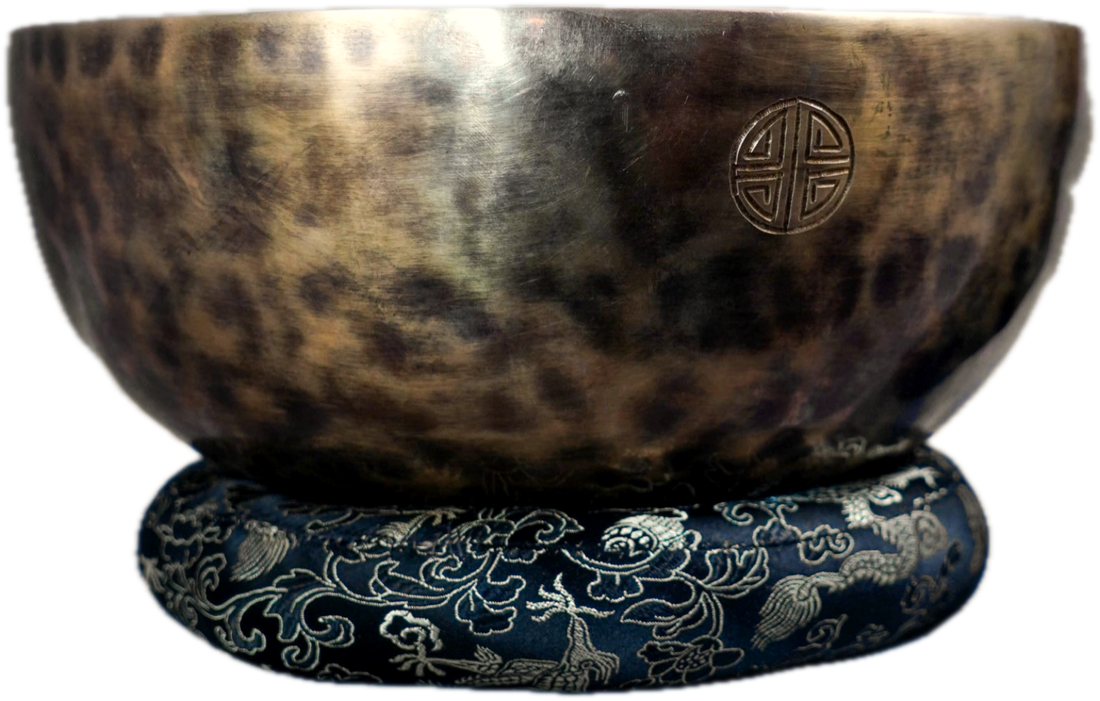
Hand-hammered
Forged from bell metal by a team of smiths, one bowl at a time.
- Metal
- Bell metal: copper and tin
- Surface
- Hammer marks inside and out
- Voice
- Layered, with a slow wavering hum
- Each bowl
- One of a kind
- Best for
- Daily practice and sound baths
From $43.22
Shop hand-hammered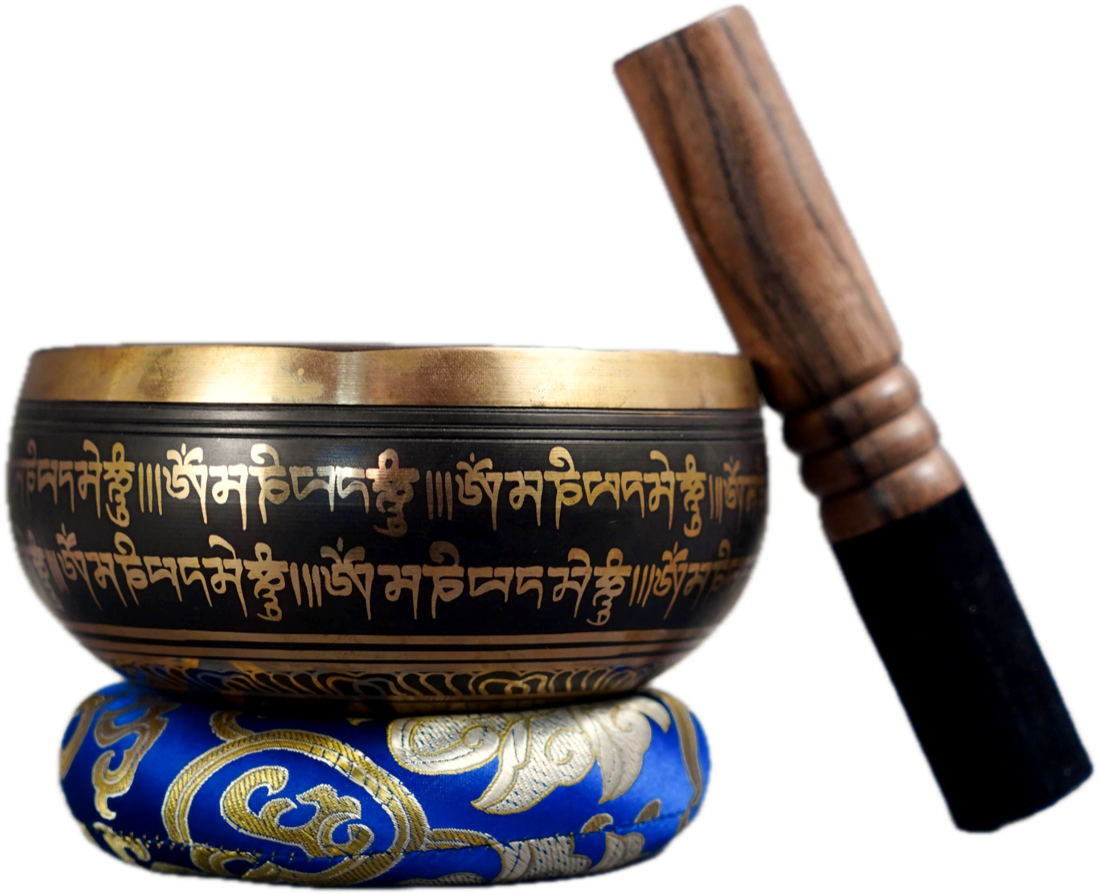
Cast and lathe-turned
Poured into a mould and finished on a lathe. A fine first bowl.
- Metal
- Brass or bronze
- Surface
- Smooth and even
- Voice
- Clear and steady, shorter
- Each bowl
- Much alike
- Best for
- A first bowl, a gift, a shelf
From $15.00
Shop cast bowlsBefore you choose a bowl
The questions people ask us most. Anything else, write to us.
Ask us a questionIs the bowl in the photos the one I'll receive?
For one-of-a-kind bowls, yes. Each has its own listing and piece number, and the photos, size and note are of that exact bowl. Bowls sold in several sizes, like our dotted bowls, are made in batches and vary a little from the photos.
Hand-hammered or cast: which should I buy?
If you'll play it every day or use it for sound work, a hand-hammered bowl. It has a richer, longer voice and no two are alike. For a first bowl, a gift or a shelf, a cast bowl does the job well at a lower price. Every listing says which one it is.
Are these 7 metal singing bowls?
7 metal is the traditional name for the bell-metal recipe behind Himalayan singing bowls, which ties seven metals to the seven classical planets. Every hand-hammered bowl is bronze at heart, copper and tin, and the other metals, where they are used, vary from workshop to workshop. Bowls we describe as 7 metal say so on their own page. Our guide to 7 metal singing bowls explains the name and how to judge a bowl by its sound.
How do I choose a note?
Choose the voice you like first. If you work with chakras, the common chart pairs C with the root through to B with the crown. Bigger bowls sound lower. To find the note of a bowl you already own, try Mudra, our free tuner app for iPhone, iPad and Android.
Which chakra is this bowl for?
Chakras are a tradition, not a measurement. In the pairing we use, C is root, D sacral, E solar plexus, F heart, G throat, A third eye and B crown, so the note named in the listing points to the traditional chakra. Other charts differ, so see our singing bowl chakra guide, and Mudra shows the pairing when you play the bowl.
How can I check a bowl's note myself?
Download the free Mudra app for iPhone, iPad or Android, strike the bowl once in a quiet room and hold the phone close. Mudra shows the note, its hertz and the cents, with no ads and no account. Our note guide has more tips.
Will it sound like the video?
Close, but your room, mallet and hand will change it a little; a bowl always sounds richer in person than through a phone speaker. If you'd like to hear a particular bowl first, write to us before you buy.
How do I play and care for it?
Strike the outer wall gently with the padded end of the mallet, or press the wooden end against the rim and circle slowly to make it sing. Keep it dry, wipe it with a soft cloth, and don't wash it with harsh cleaners: the patina is part of the bowl.
Is a bowl safe with a pacemaker, or during pregnancy?
Playing a bowl in the room is a different matter from placing one on your body. Don't place a bowl on your body if you have a pacemaker, implantable defibrillator, coronary stent, cardiac shunt or artificial valve, and never rest one on your belly during pregnancy. Avoid placing a vibrating bowl over metal implants or recent surgery. If you have epilepsy or a seizure history, talk to your doctor first.
Keep the volume moderate, because a bowl played close and loud can risk your hearing. We can't give medical advice, so please check with your clinician.
Shipping and returns
Every bowl is wrapped for the journey, and shipping is free on orders over $150. See our refund policy for returns.